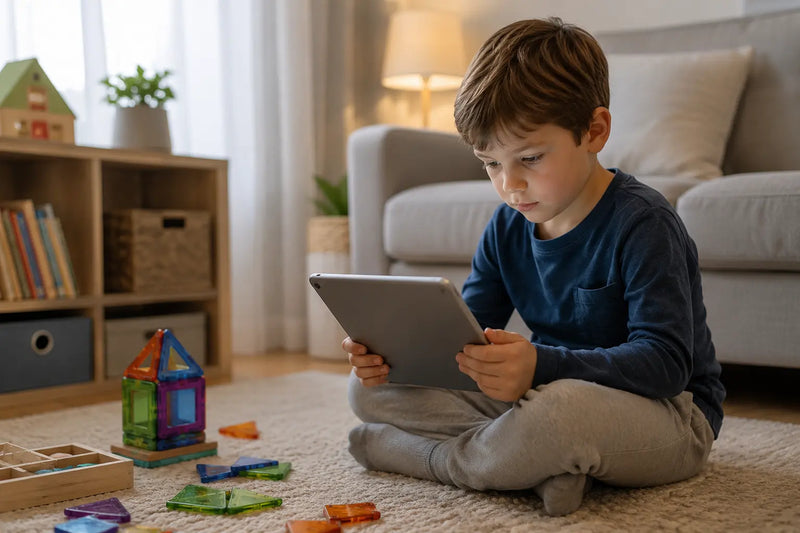
As a parent, you've probably been there — the tablet comes out at a restaurant, the TV goes on just to get through dinner prep, or your child asks for "just five more minutes" of their favourite show for the fourth time. You're not alone, and you're not a bad parent. Understanding the real impact of screen time on your child's development can help you make choices that feel right for your family — without the guilt.
What Is Screen Time, Really?
Screen time means any time your child spends watching TV, using a tablet, phone, computer, or video game console. In today's world, it's almost impossible to avoid entirely — and research shows that not all screen time affects children equally. A PBS episode watched together is very different from a toddler scrolling alone through short-form videos. The context, content, and interaction around screen time matters just as much as the amount.
Age-Based Screen Time Guidelines
Different health organisations have published slightly different guidelines over the years, but most agree on the core milestones. Here's a practical summary parents can actually use:
- Under 2 years: Avoid screens except for video calls with family members. Young brains learn best through hands-on play and real-world interaction.
- Ages 2–5: Limit to one hour of quality content per day. Co-watch when possible so you can discuss what your child is seeing.
- Ages 6+: Set consistent limits, but prioritise what they're watching rather than just how long. Ensure screen time doesn't replace sleep, physical activity, or social play.
These aren't rigid rules — they're guardrails. Your child's temperament, sleep, social connection, and overall wellbeing all matter when deciding what works.
How Too Much Screen Time Affects Developing Brains
Research consistently shows that heavy screen use in the early years is associated with:
- Reduced attention span. Fast-paced, stimulus-heavy content can make slower-paced activities — like reading a book or building with blocks — feel less engaging by comparison.
- Fewer opportunities for imaginative play. When a screen is doing the imagining for your child, there's less motivation to create their own worlds and stories.
- Disrupted sleep. Blue light from screens suppresses melatonin production, making it harder for children to fall asleep — and sleep is when young brains do their most important development work.
- Reduced face-to-face interaction. Language development thrives on conversation and back-and-forth responsiveness. Screens can't replace the conversational turn-taking that builds communication skills.
The Real Risk: Passive vs. Interactive Screen Time
Here's something worth understanding: not all screen time is equal. Passive scrolling and autoplay videos are associated with poorer outcomes than interactive, educational content — especially when a parent is watching alongside and engaging with the child about what they're seeing.
The concern isn't that children will miss out on a specific app or show. It's that screen time often replaces something important: movement, sensory exploration, creative play, and connection with real people.
Signs Your Child Might Be Having Too Much
Every child is different, but these are patterns many parents and educators notice:
- Difficulty transitioning away from screens — meltdowns when devices are turned off
- Preferring to stay indoors rather than play outside or engage in open-ended play
- Trouble focusing on activities that don't provide instant feedback or stimulation. For practical ways to rebuild longer attention, see our guide to improving a child's concentration.
- Reduced interest in toys or activities they previously enjoyed
- Difficulty playing independently without a screen present
If any of these sound familiar, it doesn't mean you've done anything wrong. It simply means there may be an opportunity to gradually introduce more hands-on alternatives.
Alternatives to Screen Time That Actually Work
The goal isn't perfection — it's balance. Here are alternatives that parents find actually stick, because children genuinely enjoy them:
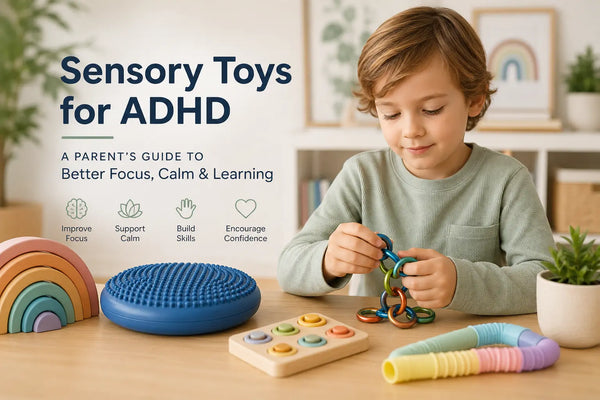
- Sensory play. fidget boards, squishy toys, and textured materials provide rich sensory input that screens simply cannot replicate. Sensory activities help children self-regulate, focus, and calm — often with lasting effects that outlast the activity itself. If your child has been using screens heavily and you are noticing attention or regulation challenges, our complete guide to sensory toys for ADHD walks through the toy categories and routines that often help.
- Building and construction play. Wooden blocks, stacking rings, and puzzle sets develop concentration, spatial reasoning, and fine motor skills. The satisfaction of completing something with their own hands is deeply motivating for young children. For a full set of age-appropriate fine motor skills activities at home — from playdough and threading to scissor skills and pre-writing — see our complete guide to fine motor activities.
- Outdoor exploration. A backyard, a local park, or even a nature walk provides unlimited sensory stimulation — texture, sound, smell, temperature — in ways no app can match.
- Art and craft. Simple materials like crayons, playdough, and craft supplies encourage creativity and fine motor development while giving children a tangible result they can be proud of.
- Music and movement. Dancing, singing, and playing simple instruments are engaging, joyful, and support physical coordination and rhythm. For a closer look at why movement matters for children's development and attention, read our guide to why movement is so central to attention.
How to Build Healthier Screen Habits as a Family
Small, consistent changes tend to work better than dramatic crackdowns. Some approaches that help:
- Designate screen-free times. Before bed, during meals, or in the first hour after school. These pockets of time become predictable rhythms children can rely on.
- Keep screens out of bedrooms. A TV or tablet in a child's room makes it much harder to monitor and limit usage.
- Give children language for what they're feeling. Often, screen-seeking behaviour is a way of managing big emotions or boredom. Teaching children to identify and name their feelings — and offering alternatives — reduces reliance on screens as emotional management tools.
- Be a role model. Children notice when adults are on their phones. Your own relationship with your devices sends a powerful message about what balance looks like.
What About Educational Apps and Shows?
Many parents feel reassured by "educational" labels, and some of that reassurance is earned. High-quality programmes like Sesame Street and targeted learning apps can support vocabulary and early numeracy — particularly when a parent co-watches and extends the learning through conversation.
However, the "educational" label is not well regulated. Do your own quick assessment: Is this teaching my child something they couldn't learn better through hands-on play? Is my child actively engaged, or passively watching? Is there interaction or just consumption?
If the answers aren't satisfying, it's perfectly fine to skip it — no matter what the app store description says.
When to Seek Extra Support
Some children are naturally more sensitive to screen exposure, and for children with developmental differences — including ADHD, autism, or sensory processing differences — the effects of excessive screen time can be more pronounced. If your child shows significant difficulty concentrating, extreme emotional disregulation when screens are removed, or withdrawal from social situations, it may be worth discussing with your GP, a developmental paediatrician, or an occupational therapist. This isn't about fixing something "wrong" — it's about understanding what your individual child needs.
It's Never Too Late to Shift the Balance
If your family has relied heavily on screens up to this point, the good news is that change is always possible. Children are remarkably adaptable, and the right alternative — something that genuinely engages them — can quickly become something they look forward to even more than the screen.
The goal isn't to eliminate technology from childhood. It's to ensure that growing brains get what they actually need: movement, sensory exploration, real connection, imaginative play, and time to be bored (because boredom is often where creativity begins).